Being involved in a car accident on a busy Las Vegas street or freeway is a jarring experience. Unfortunately, gathering the facts afterward is not always easy, and simply stating the other driver was at fault isn’t enough. Nevada law places the burden on the injured party to prove who was responsible and the true extent of their injuries and losses.
If the available evidence isn’t clear and compelling, insurance companies are likely to dispute fault and make low offers that won’t even come close to covering your actual costs. Compiling evidence and solid proof is crucial to giving yourself the best chance at fair compensation for both your injuries and financial setbacks.
Working with an experienced Las Vegas car accident lawyer ensures all of this evidence is collected, organized, and presented effectively. Here’s what you need to win your case:
Contact Valiente Mott Injury Attorneys
Types of Evidence Needed to Win Your Las Vegas Car Accident Case
Police Reports and Official Accident Documentation
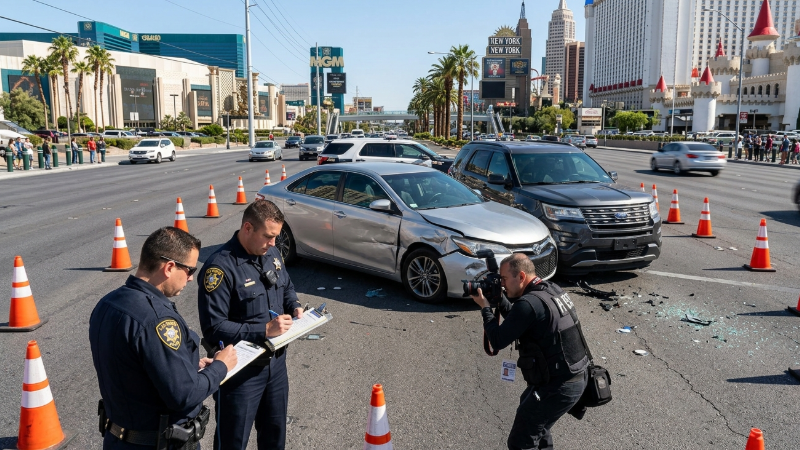
After any collision, having an official account of what happened is essential for your case. Police use their training and authority to provide an objective summary and commonly gather details at the scene. This usually includes:
- The date, time, and location of the crash: This objectively explains the details of the accident, ending any disagreement over that basic information.
- Statements from drivers and witnesses: By getting short statements from those involved and anyone who saw what happened, police are able to lock in early versions of what occurred. They’ll also write down names and contact information of witnesses and everyone involved.
- Observations about road conditions and vehicle damage: Details such as weather, poor lighting, or the position of cars help clarify whether conditions contributed to the collision.
- Diagrams showing how the collision occurred: Law enforcement often draws simplified diagrams that put accident scenes into perspective and show their interpretation of how the crash happened.
- Citations issued for traffic violations: When police find that a driver broke the law before causing an accident, they can hand out traffic citations, which can be critical evidence in your case, as it proves someone else did something wrong/in violation of the law.
Even though police reports are not the final word in assigning legal fault, they set the groundwork for any insurance or court proceeding in a Las Vegas car accident claim.
Photographs and Video from the Accident Scene
Capturing images or video at the scene provides proof of what the scene looked like, which can help show what really happened. This could include:
- Photos of vehicle damage: This can show where the vehicles were hit and what damage occurred, which can help experts analyze how the collision occurred and the direction of impact.
- Skid marks, debris, and road evidence: Skid marks, glass, and other debris on the road can also help experts determine what happened to cause the accident.
- Traffic signals or nearby stop signs: Photographs capturing traffic lights and stop signs can provide evidence about whether anyone violated the law or didn’t yield properly.
- Weather and road conditions: An image might document areas slick from rain, sun glare, poor signage, or road potholes that impacted driver actions or visibility.
- Pictures of visible injuries: By documenting your injuries right as they occur, you have evidence that the accident is what actually caused your injury.
- Dashcam or traffic camera footage: Video footage provides objective evidence about what occurred.
Well-documented scenes typically leave less room for argument later in negotiations or at trial.
Witness Statements
When there are conflicting stories, witness statements can be invaluable. Third-party accounts are often seen as less biased and provide another angle for understanding what took place. These accounts support crucial moments, such as who was moving in what direction, if either party applied the brakes, how they acted when they got out of their vehicles, and any other information they remember about the incident.
Medical Records and Treatment Documentation
Without medical evidence, you won’t be able to prove that you were injured in the accident. So, even if you can prove someone else caused the incident, you won’t have evidence of your damages. Here’s what you often need:
- Emergency room reports: The emergency room notes can explain when you came in and what you were treated for, linking your injuries to the accident.
- Imaging results: X-rays and MRIs may show bone breaks, spinal trauma, or soft-tissue injuries and explain persistent symptoms that tie back to the crash.
- Treatment and follow-up notes: It’s important to have notes on additional treatment and follow-up appointments as well. This could include physical therapy and medication. This shows that you were continuing to experience pain and that you consistently went to appointments for treatment.
Clear, organized medical documentation is important to show the extent of your injuries and your future prognosis.
Vehicle Damage and Accident Reconstruction Evidence
Physical evidence and expert analysis can also provide important support for your claim, especially when the accident was complex or involved multiple vehicles. Photos of your vehicle and property damage, repair and damage estimates, and black box information from vehicles can be analyzed by experts so they can determine how the accident occurred and who is likely to have been at fault.
Documentation of Financial Losses
To win compensation, you need to clearly quantify your losses and show that they are linked to the accident. This often includes:
- Medical and hospital bills: To recover the compensation you need for your injuries, you must be able to provide proof of your expenses. Make sure you keep track of all hospital expenses so you can be reimbursed. This should include appointments, physical therapy, medication, and any out-of-pocket expenses related to your injuries.
- Proof of missed work and reduced earning capacity: You should be able to obtain compensation for any lost wages or loss of earning capacity in the future if you aren’t able to go back to work or your same job. This can be done by providing letters from employers, tax returns, and pay stubs.
By combining all of these types of evidence, you can build a strong case and recover what you are entitled to. Contact our team today to schedule a free consultation and we’ll help you determine your next steps.