Slip and fall accidents happen fast and proving exactly what caused them is where most cases fall apart. Property owners and insurers will question your version of events, shift blame, or argue the hazard didn’t exist long enough to fix. That’s where surveillance footage becomes critical. If you’re dealing with a disputed claim, a Las Vegas slip and fall lawyer can move quickly to secure video evidence before it disappears and tie it directly into your broader premises liability case.
Contact Valiente Mott Injury Attorneys
How Security Footage Can Make or Break Your Slip and Fall Case
Why Security Footage Is So Important in Slip and Fall Cases
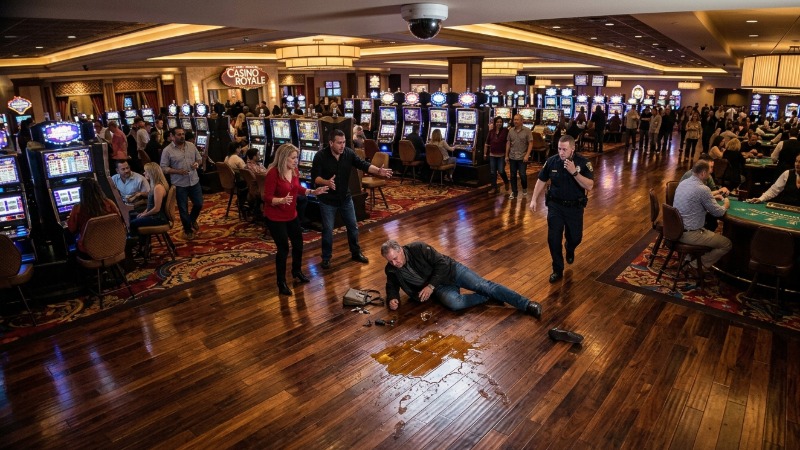
In Las Vegas, surveillance cameras watch over most casinos, hotels, grocery stores, and residential buildings. These devices record the premises from multiple angles around the clock. Access to these video recordings often offers the most honest, objective account of what truly happened, unbiased by either party’s memory or perspective.
Security camera footage can make a real difference by revealing:
- Exactly how and where the slip and fall occurred
- The state of the property immediately before, during, and after the accident
- Clear evidence of dangerous conditions such as water spills, defective flooring, or debris
- The victim’s actions leading up to the fall, focusing the case on property maintenance rather than personal mistakes
Having this neutral, visual proof makes it much more difficult for the opposition to deny the existence or severity of a hazard.
How Video Footage Can Prove Property Owner Negligence
To win a slip and fall claim in Nevada, you generally need to prove the property owner failed in their legal duty to keep the premises reasonably safe. Security footage often strengthens a claim by offering strong evidence of the property owner’s or employees’ actions before the injury. Valuable footage might show:
- Store clerks walking by a spill, failing to clean or contain the mess
- A hazard being present for a lengthy period – far longer than “reasonable” for staff to respond
- Missing or improperly placed safety warnings
- Ongoing disrepair, like unaddressed broken tiles, that had gone unfixed and exposed many other visitors to risk
This type of evidence can hold property owners accountable by exposing what business and property owners actually knew or should have known, and how (or if) they cared for their property.
Why Acting Quickly Is Critical to Preserve Video Evidence
Security footage can make or break a slip and fall case, but one of the biggest hurdles is getting access to this evidence before it’s lost permanently. Businesses in Las Vegas often overwrite surveillance footage on a regular schedule to save storage space. Being proactive and understanding the preservation process can significantly impact the strength of your personal injury claim.
How Long Is Security Footage Kept?
Different businesses have different policies, but the majority of surveillance systems do not keep video records long-term. Small shops or restaurants might keep recordings for just 24 or 48 hours, while larger casinos, hotels, or grocery stores could hold footage for several days, or at most a few weeks.
It’s important to note that after these periods pass, footage can be completely unrecoverable, which can permanently damage any potential injury claim.
How an Attorney Can Help with Preservation
A Las Vegas personal injury lawyer can take swift and formal legal action to increase the chances that surveillance recordings are saved in time. One effective method is sending a “spoliation letter.” This legal notice communicates to the business or property management their responsibility to preserve all recordings that could relate to your accident.
Sending a spoliation letter serves several purposes:
- Creates a record showing you took early, reasonable steps to secure evidence.
- Places a clear legal obligation on the owner or manager not to destroy or overwrite the footage.
- Sets the stage for court sanctions or other penalties if the defendant ignores your request and crucial evidence is lost or discarded.
All personal injury victims should be aware that property owners and insurance companies do not have to automatically preserve recordings, particularly if no formal injury claim or request exists. Acting within hours or days of the accident can make a significant difference in preserving evidence.
When Security Footage May Hurt a Slip and Fall Claim
While surveillance video is often a powerful tool for injury victims, it can work against your case if the recordings contradict your version of events. Sometimes, the footage may reveal actions or details that raise questions about whether the property owner should bear all of the blame for your accident. Footage can sometimes show:
- The injured person passing by or ignoring posted warning signs (such as wet floor cones or barrier tape)
- Running, jumping, carrying objects improperly, or behaving carelessly, undermining your claims that you were behaving cautiously
- Hazards, such as a spill or debris, appearing only seconds before the incident, making it unreasonable to expect staff to have fixed the problem in time
- The fall resulting from personal actions (like tripping over your own belongings) or unrelated medical events, rather than poor property conditions
In these scenarios, video evidence can make it more difficult to prove the property owner’s fault or might reduce their share of responsibility. This is especially important in Nevada, which uses a modified comparative negligence rule.
Nevada’s Comparative Negligence Rule and Its Impact
If surveillance video reveals that you had some degree of fault for the incident, Nevada law allows your compensation to be reduced based on your percentage of fault. This allocation of fault, known as modified comparative negligence, plays a key role in determining final settlement amounts.
- Under Nevada law, your percentage of fault is subtracted from the total compensation.
- For example, if you are found 20% at fault, a $100,000 settlement drops to $80,000.
- If you are deemed to be more than 50% responsible, you may receive no compensation even if you are injured because of someone else’s negligence.
This system makes it extremely important to respond quickly and carefully when surveillance evidence might complicate your claim. A lawyer can help you obtain helpful video evidence and push back against claims that may try to pin fault on you. Contact our team today to schedule a free consultation with our Las Vegas slip and fall lawyers.