
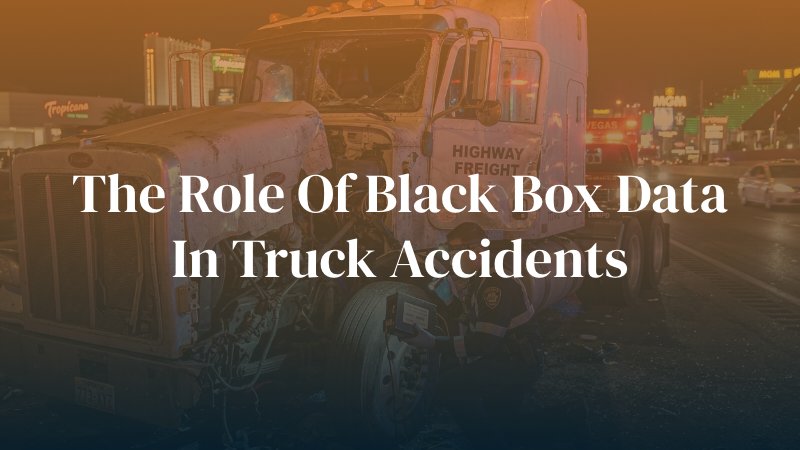
Most commercial trucks have powerful data and safety tools, including Electronic Control Modules (ECMs). These devices are commonly called “black boxes.” These monitoring systems are usually built directly into the truck’s engine or onboard electronics. They record and store certain details about how the truck is driven, capturing important data.
If you’ve been involved in a crash, a Las Vegas truck accident lawyer can help secure and interpret this data before it’s lost or overwritten. In Las Vegas, black box data often becomes one of the most important pieces of evidence for determining what happened and who may be legally responsible.
What Kind of Information Does a Truck’s Black Box Record?
Black boxes track a wide variety of essential facts that matter in both routine checks and accident investigations. Here’s an overview of the information they provide:
- Vehicle Speed: These devices keep continuous records of how fast the truck is moving.
- Braking Patterns: Data shows when and how hard the driver applied the brakes before, during, and after an incident.
- Acceleration and Deceleration: Increases and decreases in speed are logged, highlighting how gradually or suddenly a truck changed speed.
- Truck Operation: Logs may show how long the truck has been running, which can serve as supporting evidence when evaluating potential driver fatigue.
- Sudden Changes Before Impact: Some systems will record large or abnormal movements, like swerves, quick stops, or sharp turns right before a crash.
- Engine Performance: Black boxes track how well the truck’s engine is working by recording things like how long it’s running, if there are any problems or system errors, and whether the truck was struggling right before the crash.
The data can provide important insight into what happened moments before, during, and immediately after a serious accident.
Why Black Box Data Matters in Truck Accident Cases
When piecing together what truly happened in the chaotic moments surrounding a Las Vegas truck crash, documented evidence is incredibly important. Black box data offers layers of reliability that can reach beyond conflicting witness statements. Here’s what’s so important about these devices:
Provides Data-Driven Evidence
A truck’s black box is objective; it just provides information, like how fast the vehicle was going, how hard it braked, or how long it had been in operation.
Helps Confirm or Challenge Driver Statements
The black box can either corroborate or contradict the statements of people involved in the accident. For example, if the truck driver claimed they pressed their brakes at the right time and the other vehicle was at fault, the black box may provide information that this either is or isn’t accurate.
Can Show Unsafe Driving Behavior
Aggressive speeds, heavy acceleration between stops, or harsh braking all point to actions that put everyone at risk. Seeing these patterns can provide an overview of whether the truck driver was responsible for the accident.
How Black Box Data Is Used in Court
In court, black box data is introduced as technical evidence, usually with the help of an expert who can explain what the data is saying. This information is often used by accident reconstruction experts to help reconstruct how the collision happened before and after impact.
Judges and juries consider black box records together with things like witness accounts, police reports, and any nearby camera footage to get a full picture of the event. By pairing it with other evidence, the data helps make complicated cases clearer and harder for at-fault parties to dispute.
Determining liability after a truck accident is rarely simple, but with black box data, there’s objective information that can be looked at. For anyone facing a truck accident in Las Vegas, a Las Vegas personal injury attorney can help preserve this evidence and build your claim. Reach out today to schedule a free consultation if you need help.